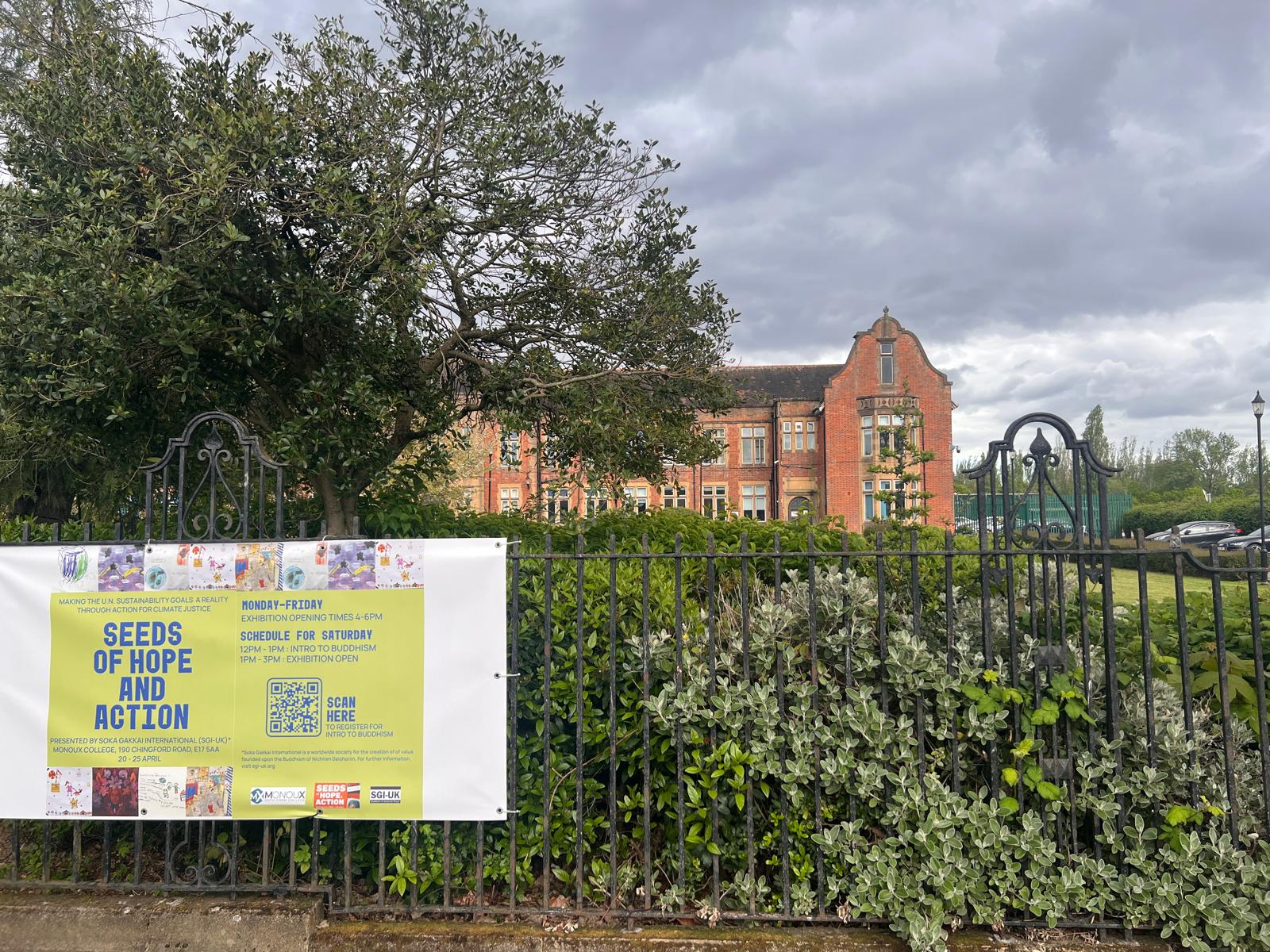

Seeds of Hope & Action, Post-Exhibition Reflection
Earth Day 2026 – “Our Power, Our Planet” & Civic Action
The Seeds of Hope & Action exhibition closed on 25 April, and celebrated the Earth Day 2026.
This year’s Earth Day theme, “Our Power, Our Planet”, focused on civic action — the role individuals and communities play in shaping environmental outcomes. The exhibition aligned closely with this perspective, translating global sustainability goals into practical, everyday behaviours.
Framed around the 17 United Nations Sustainable Development Goals (SDGs), the exhibition brought together a range of practices exploring how environmental and social impact can be addressed across different disciplines.
My work was selected as one example of how individual action, applied consistently, can generate measurable impact, using textile practice as a case study.
Context
Since the SDGs were introduced in 2015, much of my work has aligned with their principles, often within larger projects and organisational structures.
However, impact was not always visible or measurable. In many cases, the connection between intention and outcome remained unclear, and not all projects delivered the positive change they aimed to achieve.
This has informed a shift in my current practice.
Working independently now allows for direct control over materials, processes, and engagement models, making it possible to embed sustainability principles more intentionally and track their impact more clearly.
SDG Alignment Through Practice
The work presented connects to multiple SDGs, in particular:
- SDG 12 – Responsible Consumption and Production
Use of reclaimed materials and circular approaches - SDG 13 – Climate Action
Reduction of emissions through reuse and extended lifecycles - SDG 6 – Clean Water and Sanitation
Lower water usage through material reuse - SDG 11 – Sustainable Cities and Communities
Community-based workshops and collective making - SDG 4 – Quality Education
Accessible, skills-based learning - SDG 10 – Reduced Inequalities
Low barriers to participation - SDG 17 – Partnerships for the Goals
Collaboration through shared practice
Works Presented
Three pieces were included, each representing a different level of impact: personal, collective, and systemic.
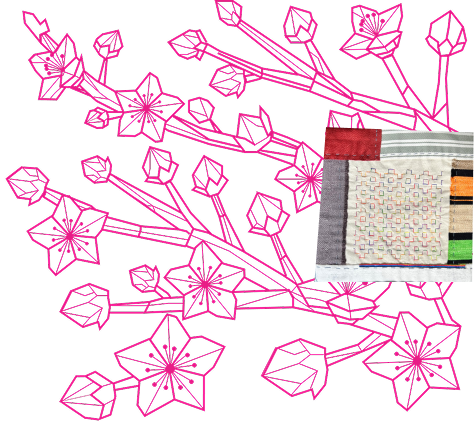
The Sashiko Book (Personal Level)
A textile book composed of hand-stitched panels made from reclaimed fabrics (1.220 kg).
The work focuses on process rather than outcome, addressing a key barrier to participation: the perception that making requires advanced skills. By reframing imperfection, it supports broader access and engagement.
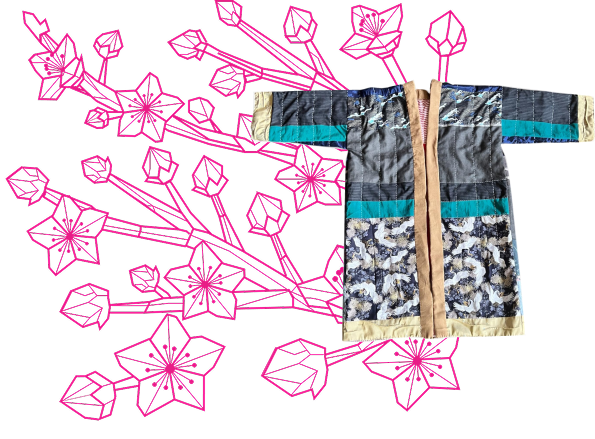
The Hanten Jacket (Collective Level)
A garment constructed from 1.050 kg of fabric offcuts collected during workshops.
Materials typically considered waste were retained and reassembled, demonstrating how small behavioural changes at group level can produce tangible outcomes.
The work highlights that waste is often the result of process and perception, rather than material limitation.
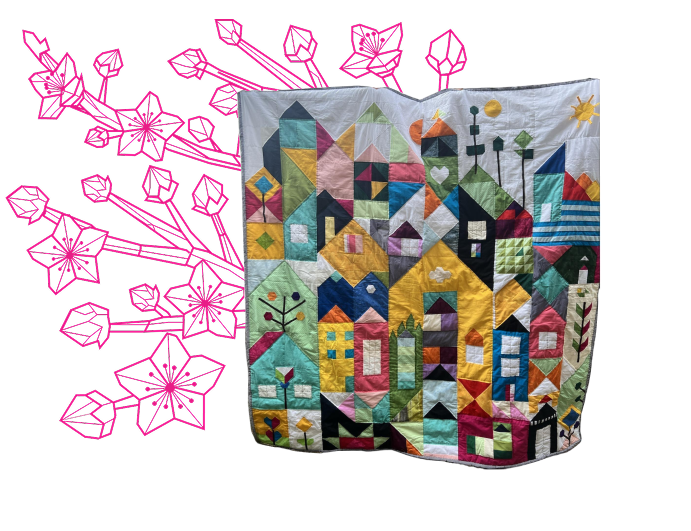
The Village Quilt (Systemic Level)
A quilt made from approximately 3.860 kg of reclaimed fabrics collected over 1.5 years.
Each element contributes to a larger structure, representing how individual actions connect and scale over time through shared values and collaboration.
Extending the life of clothing by 9 months can reduce environmental impact by 20–30%, reinforcing the importance of longevity.
Key Observations
Across the exhibition, several consistent insights emerged:
- Behaviour is a key driver of impact
Everyday decisions directly influence environmental outcomes - Perception limits engagement
Confidence, rather than access, is often the main barrier - Small actions are scalable
When repeated and shared, they contribute to systemic change - Time is a critical resource
Slower processes support more sustainable practices
Earth Day Reflection
The theme “Our Power, Our Planet” emphasises that environmental change is not only driven by policy or industry, but also by civic participation.
This exhibition reinforces that perspective.
It demonstrates that:
- sustainability can be embedded in daily actions
- impact is cumulative
- participation is more important than perfection
Conclusion
The Seeds of Hope & Action exhibition translates the SDGs into tangible, everyday practices.
It shows that sustainability is shaped not only by large-scale systems, but also by:
- extending the life of materials
- reusing and repairing resources
- sharing skills within communities
- rethinking value beyond consumption
The exhibition has now closed.
The focus moving forward is how these behaviours continue to be adopted, shared, and scaled.
